Here is how to make these vowels using SynthV’s phoneme set:
The semivowel j corresponds to: English y, Japanese y, Mandarin Chinese j, Cantonese j and :i, Spanish I, and Korean j
The semivowel w corresponds to: English w, Japanese w, Mandarin Chinese w, Cantonese w and :u, Spanish U, and Korean w
- ɪ. Examples: Bit - ɪ, Beer - ɪː, Bee - ɪj
Use English ih or Cantonese I. When French arrives, you can also use the vowel that it gives for clé (not sure what the representation of this sound will be, but you can try typing in the word clé once it arrives and use that). Chinese voicebanks may struggle with these sounds and make them muddy before certain consonants, so you can double up the phoneme (ih ih) to enhance clarity.
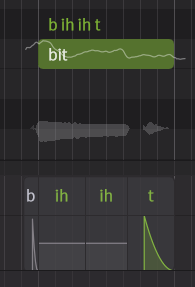
For Cantonese, if both
I and I I fails, use i I to force a clearer vowelAlternatively, you can use the phoneme “i” from any language other than English and subtly increase mouth opening to make it sound correct. (notice that in the screenshot the Zoom is set to 200%)
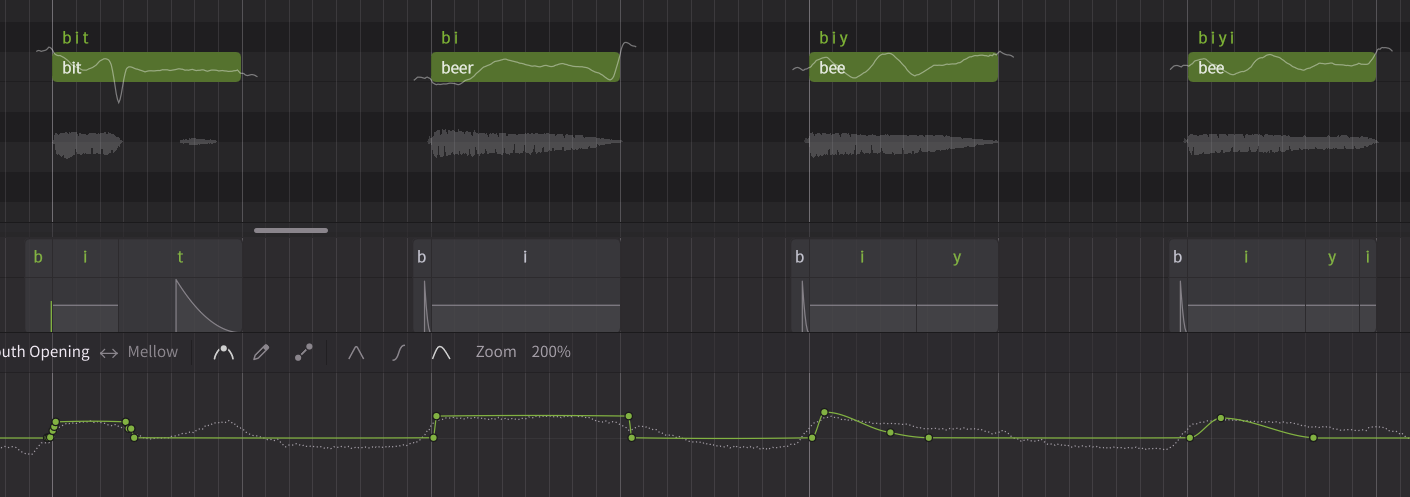
Notice that for ɪj, you only apply Mouth Opening to the ɪ part and not the j part. If you set Mouth Opening throughout the diphthong, it will sound more like ɪː rather than ɪj.
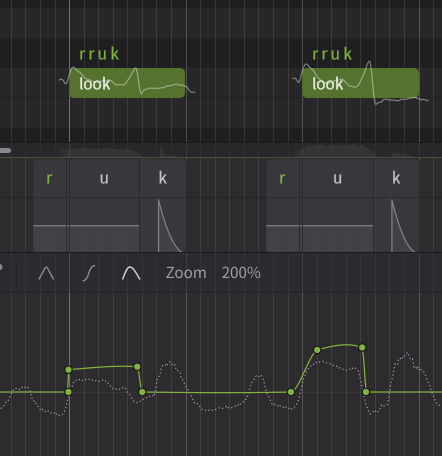
- ɵ. Examples: Look - ɵ, Lure - ɵː
For this use Mandarin u@ or Cantonese 8. Sometimes English uh will work but most of the time it will be too accented. Cantonese 8 might reach too far back into o territory, and might sound wrong. I’d recommend waiting for French to be able to use this sound, as it exists in many common French words, such as le, de, je, ne, que, ce, me, etc.
For now, Mandarin u@ is the closest, but sometimes you might get an unwanted W glide. To get rid of it, you can add an additional short vowel such as “i\” or “@” before it. I’d also recommend trying Japanese u + Mouth Opening.
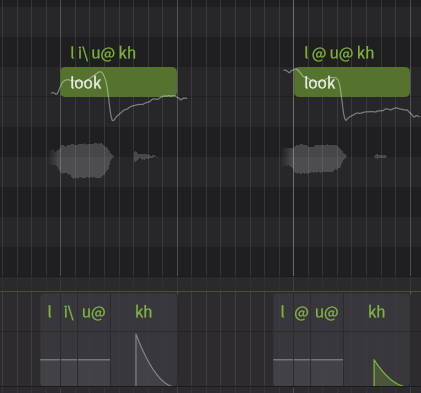
If using the Japanese u, differences in Mouth Opening can subtly change the accent.
- ɛ. Examples: Bed - ɛ, Bear - ɛː, Bay - ɛj
Use English eh, Japanese e, Mandarin e, Cantonese E, Spanish e, Korean e_o.
If your ɛ ends up sounding too much like an ɪ (so Bed, Bear, Bay sound more like Bid, Beer, Bee), use Mouth Opening to fix it (but again, watch out not to put Mouth Opening on the j part for ɛj). If you’re using English eh and it sounds wrong, you may want to use ae, or double up the phoneme (eh eh) to enhance vowel clarity.
- ʌ. Examples: Stub - ʌ
Some speakers have a brighter timbre sound (/ɐ/) which is Cantonese 6
Other speakers have a darker timbre sound (/ʌ/) which is Korean V
You can use any of these (arranged from brightest to darkest)
Cantonese 6, English ah, Mandarin 7, Mandarin A, Korean V
- ɔ. Examples: Bob - ɔ
Use English ao, Japanese o, Mandarin o, Mandarin uA, Cantonese O, or Spanish o. If it sounds too much like “ahh”, reduce the mouth opening.
- a. Examples: Cat - a, Cow - aw
Japanese a, Mandarin a, Mandarin ia (you can use “a ia” to remove i-glide from ia), Cantonese a, Spanish a, Korean 6. Also, you can use English ae with Mouth Opening, or English aw (for aw sounds)
- ə - Examples: A - ə, Bird - əː, Go - əw
English ax, Mandarin @. For əw specifically, English ow, Mandarin @U, Cantonese 9 :u
- ɑ - Examples: Dark - ɑː, Dye - ɑj
English aa, English ao, Mandarin A, Mandarin uA
- o - Examples: Saw - oː, Soy - oj
Japanese o, Mandarin U, Cantonese o, Cantonese U, Korean o
also English ao (with reduced mouth opening), English oy (for oj)
French will use the sound in the word eau
- ʉ - Examples: too - ʉw
English: uw, Japanese u
I think the Mandarin y with mouth opening is a very convincing sound for ʉ (maybe also Cantonese but I don’t know for sure)
Here you can hear what it sounds like
As for the example sentences I used ChatGPT: